
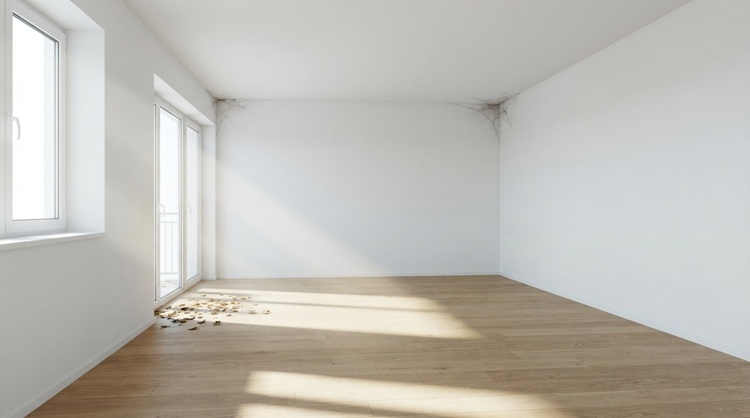

An empty flat can look surprisingly grubby, even when it was kept reasonably clean while furnished. Once the sofa, rugs, cupboards, and other belongings have gone, there is nowhere for dust and marks to hide.
Suddenly, you can see the scuffed patch where the sofa sat, the dust along the skirting boards, and the faint marks on the walls that were barely noticeable before. Even clean floors can look tired when there is nothing else in the room to draw your attention away from them.
That is why cleaning after the furniture has been removed is so important if you want the property to look properly finished.
Bright Light Reveals Hidden Dirt
Natural light can make an empty flat look brighter and more spacious. It can also be remarkably good at exposing every speck of dust you thought had escaped notice.
Sunlight coming through a window can highlight particles on floors, dusty skirting boards, fingerprints on glass, and marks on painted surfaces. Artificial lighting can do the same, particularly when it shines directly across a wall or polished floor.
This does not mean the flat has suddenly become dirtier. The dirt was probably there already. The difference is that an empty room gives it nowhere to hide.
That is why it helps to clean in good daylight where possible. You can see what you are doing more clearly, and changing your position around the room can reveal marks that were invisible from another angle.
It is a little unfair, really. You can spend weeks barely noticing a dusty skirting board, then one shaft of sunshine arrives and acts as a witness for the prosecution.
Bare Floors Show More Dirt
Furniture can hide a surprising amount of floor space. Once it is gone, the entire surface becomes visible.
This can reveal dust, hair, crumbs, stains, scuff marks, and areas where dirt has built up around the edges of the room. Carpets can also show flattened areas where furniture has been standing for months or years.
Give the floor a thorough vacuum rather than only running over the obvious central areas. Pay particular attention to skirting boards, corners, underneath radiators, and the edges where the floor meets the wall.
Hard floors may also need mopping after vacuuming, using a cleaning product suitable for the specific flooring. Avoid soaking materials such as laminate or untreated wood, as excessive moisture can cause damage.
Once the floor is completely clear, you can finally see whether it needs anything more than a routine clean.
Empty Walls Reveal Every Mark
Walls are easy to overlook when a room is furnished. A sofa might cover the lower section, while artwork and shelving distract the eye from smaller marks elsewhere.
Remove everything, though, and those surfaces suddenly become much more noticeable.
Look for fingerprints around switches and doorways, marks from furniture, dust around fixtures, and small scuffs. Kitchen walls may also have traces of cooking residue, while bathroom walls can accumulate moisture-related marks.
Do not automatically scrub every mark with a strong cleaner. Painted surfaces can be surprisingly delicate, and aggressive cleaning can leave a more obvious patch than the original mark.
Start gently and use a suitable method for the surface. If the wall is damaged rather than dirty, cleaning may not be enough, and a small repair or touch-up could be necessary.
Furniture Usually Hides Dust
An empty flat gives you access to areas that may have been difficult to reach while the property was furnished.
This includes the space behind appliances, underneath beds and sofas, along skirting boards, inside wardrobes, and around the edges of rooms. These areas can collect dust for a long time simply because they are rarely disturbed.
End-of-tenancy cleaning is an opportunity to deal with those hidden areas properly.
Work methodically rather than rushing around with a duster. Dust surfaces from higher to lower levels, then vacuum the floor so anything that falls during cleaning can be removed afterwards.
The difference can be surprisingly noticeable. Sometimes the room does not need a miracle. It just needs someone to finally clean the bit behind the wardrobe.
Empty Kitchens Look Grubbier
Kitchens can look particularly stark when they are empty.
Once appliances, food, utensils, and other belongings have been removed, greasy marks and residue around cupboards and worktops become much easier to spot. Inside cupboards and drawers may also be covered in crumbs or fine dust.
Clean worktops, cupboard fronts, handles, splashbacks, and other suitable surfaces using products appropriate for the materials. Do not forget the tops of cupboards, where dust and cooking residue can combine into a rather unpleasant layer.
The oven and hob deserve attention, too. They can be among the hardest-working surfaces in a kitchen and often require more than a quick wipe.
Cleaning the kitchen thoroughly after everything has been removed is much easier than trying to work around someone else’s belongings.
Bathrooms Look Worse When Bare
Bathrooms have fewer places for dirt to hide, which means an empty one can be brutally honest.
Limescale around taps and shower fittings, soap residue on tiles, water marks on glass, and grime around the toilet can all become more obvious once personal belongings have disappeared.
Clean the main surfaces thoroughly, but pay attention to the less obvious areas as well. Wipe around taps and fittings, clean mirrors and glass, and check the edges where different surfaces meet.
Ventilation also matters. If the bathroom has condensation or lingering dampness, allow it to dry properly and investigate any persistent moisture problems rather than simply cleaning over them.
A clean bathroom should look fresh rather than merely empty.
Hard Edges Make Dirt Stand Out
Skirting boards are very good at collecting dust and remarkably good at being ignored.
Furniture often hides sections of them, while everyday cleaning tends to focus on the more obvious surfaces. Once the flat is empty, dusty skirting boards can stand out against clean floors and freshly cleaned walls.
Door frames, handles, light switches, and the areas around doorways deserve attention for similar reasons. These are high-contact areas where fingerprints and marks accumulate gradually.
Use a suitable cloth and cleaning solution for the surface, and take care around painted finishes. A few minutes spent working around the edges can make the whole room feel noticeably cleaner.
It is one of those jobs that takes longer to notice when it is done than when it is not. That is usually a sign that it was worth doing.
Windows Without Curtains Look Smudged
Dirty windows can make an otherwise clean flat feel dull, especially when there is no furniture to distract from them.
Glass shows fingerprints, dust, water spots, and streaks particularly well when sunlight hits it. Window frames and sills can collect plenty of dust, too.
Clean the glass using a suitable glass cleaner or another appropriate method, and remember to wipe the frames and sills. If the windows are accessible and safe to clean, dealing with both sides can make a considerable difference.
There is no need to make the glass look artificially perfect. The aim is simply to remove the everyday grime that becomes obvious when the property is empty.
Marks Left by Tenancy Wear Are Exposed
An empty flat does not only reveal dirt. It can also reveal ordinary signs of living in the property.
You may find small scuffs where furniture has been moved, marks around handles, residue from adhesive hooks, or minor damage that was previously hidden. Some of these issues can be cleaned. Others may require maintenance or repair.
This is particularly important at the end of a tenancy because cleaning and repairs are not the same thing.
A dirty wall may need cleaning. A chipped wall needs repair. A stained carpet may need professional cleaning, while a damaged carpet may need something more substantial.
Identifying the difference helps you deal with the property properly instead of trying to scrub away a problem that cannot be cleaned.
Clean After Everything Has Been Removed
Timing makes a significant difference to an end-of-tenancy clean.
Cleaning before furniture and belongings have been removed means you may need to work around boxes, wardrobes, beds, and appliances. Dust can also fall or be moved around while the property is being emptied, undoing some of your work.
Where possible, carry out the final clean once everything belonging to the tenant has been removed. This gives you access to the full floor area and makes it easier to reach the edges, corners, cupboards, and other previously hidden spaces.
If the flat needs a particularly thorough clean, booking end of tenancy cleaning in Croydon can also take the pressure off when there is already a moving schedule to manage.
A professional clean can be especially useful when the property needs attention throughout rather than simply a quick tidy before the keys are handed back.
Conclusion
An empty flat is not necessarily dirtier than a furnished one. It simply gives dirt, dust, marks, and minor damage far more visibility.
Once everything has been dealt with, it can look completely different. The rooms feel brighter, the surfaces look fresher, and the property is much easier to assess.
Sometimes an empty room does not need furniture to look inviting. It just needs the dust to stop getting top billing.
